

If you follow quantum computing news, you’ve probably noticed that not all quantum computers are built the same way. IBM and Google use superconducting circuits cooled to near absolute zero. IonQ and Quantinuum trap individual atoms with lasers.
This isn’t just a matter of engineering preference. Each approach represents a fundamentally different answer to the same question: how do you build a system that can maintain and manipulate quantum states long enough (and coherent enough) to do useful computation? Each approach has real advantages, real limitations, and a different path to scaling up. And this directly speaks to system speed, stability, and maintenance.
Understanding these differences is important for a few reasons. If you’re evaluating claims from quantum computing companies, knowing the underlying technology helps you assess what’s realistic… and what’s hype. If you’re thinking about potential applications, different technologies are better suited to different problems. And if you’re trying to understand where the field is headed, the interplay between these approaches will shape what quantum computers can actually do in the next decade.
This article walks through the major quantum computing technologies: how each one works at a physical level, what its strengths and weaknesses are, and where it stands today. We’ll then compare them directly on the metrics that matter: speed, accuracy, coherence, connectivity, and scalability.
We are not considering D-Wave’s annealing technology in this discussion, as it is not logic gate technology.
See Our Stance on D-Wave for more information on quantum annealing.
The Four Leading Approaches
Superconducting Qubits
Manufacturers: Google’s Willow and IBM’s Heron
Superconducting quantum computers use tiny electrical circuits made from metals that, when cooled to near absolute zero, conduct electricity with no resistance. At these temperatures, the circuits start behaving according to quantum mechanics rather than classical physics. The circuit becomes an artificial atom, with quantum states that can be manipulated using microwave pulses.
The main advantage is speed. Superconducting gates operate in nanoseconds, roughly a million times faster than trapped ion gates. The fabrication also builds on existing semiconductor manufacturing techniques. The same fabrication methods used to make classical chips can, with modification, produce superconducting circuits. This gives the approach a plausible path to manufacturing at scale… eventually. Then again, by the time quantum computers are widespread enough to need mass production, other technologies will likely have developed their own fabrication pipelines.
The main disadvantages are fragility and limited connectivity. These qubits lose their quantum state quickly (within a few hundred microseconds) so computations must be fast. And because qubits are fixed in place on a chip, each one can only interact directly with its nearest neighbors. Running an algorithm that requires distant qubits to interact means inserting extra swap operations, which adds errors and slows things down. The extreme cooling requirements also add cost and complexity.

Trapped Ion Qubits
Manufacturers: Quantinuum’s Helios and IonQ
Trapped ion quantum computers use individual atoms as qubits. The atoms are ionized (given an electric charge) so they can be held in place by electromagnetic fields, suspended in a vacuum. Lasers manipulate the quantum states of each ion and create entanglement between them.
The main advantage is precision. Trapped ions have the highest gate fidelities and longest coherence times of any major platform. While superconducting qubits hold their state for microseconds, trapped ions can maintain coherence for seconds or minutes. Trapped ion systems also offer flexible connectivity: ions can be physically shuttled around the trap, so any qubit can be brought next to any other to perform a gate.
The disadvantage is speed. Moving ions takes time (tens of milliseconds), and gate operations themselves are much slower than in superconducting systems. The laser systems required for control are also complex and expensive, and scaling to larger numbers of ions requires increasingly sophisticated trap engineering.
Neutral Atom Qubits
Manufacturers: QuEra Computing and Pasqal
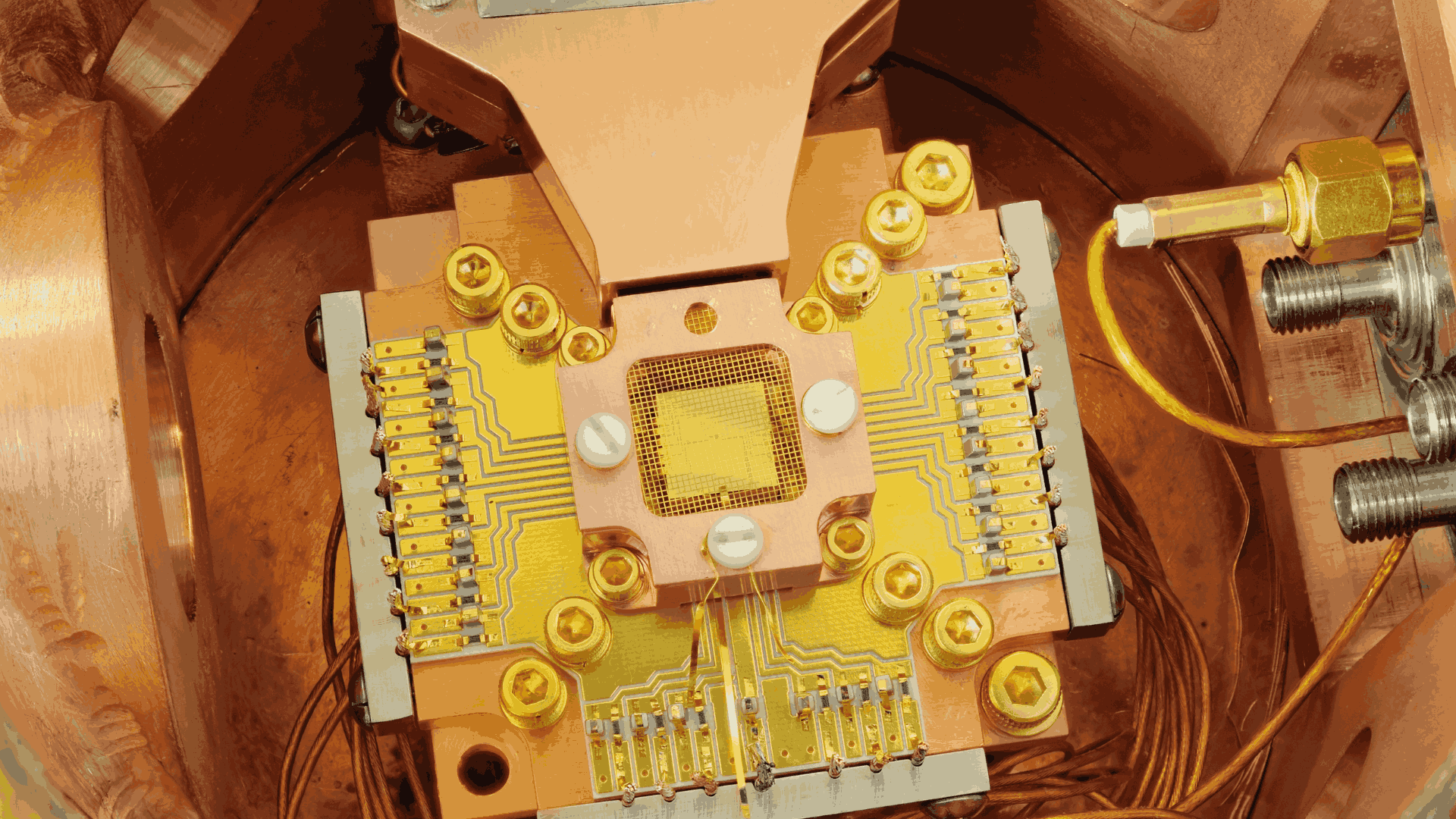
Neutral atom quantum computers also use individual atoms as qubits, but the atoms keep all their electrons and have no charge. Instead of electromagnetic traps, they’re held in place by tightly focused laser beams called optical tweezers. These tweezers can arrange atoms in precise two- or three-dimensional patterns and rearrange them on the fly.
The main advantage is scalability. Adding more qubits doesn’t require fundamentally new hardware—you just add more tweezer beams. The arrays can also be reconfigured dynamically, moving atoms around to create whatever connectivity pattern an algorithm needs. Like trapped ions, coherence times are long.
The disadvantages are similar to trapped ions: moving atoms takes time, so operations are slower than superconducting systems. Gate fidelities have historically lagged behind trapped ions and superconducting qubits, though recent results have closed much of that gap. The technology is also less mature overall, with fewer commercial deployments.

Photonic Qubits
Manufacturers: Xanadu and PsiQuantum
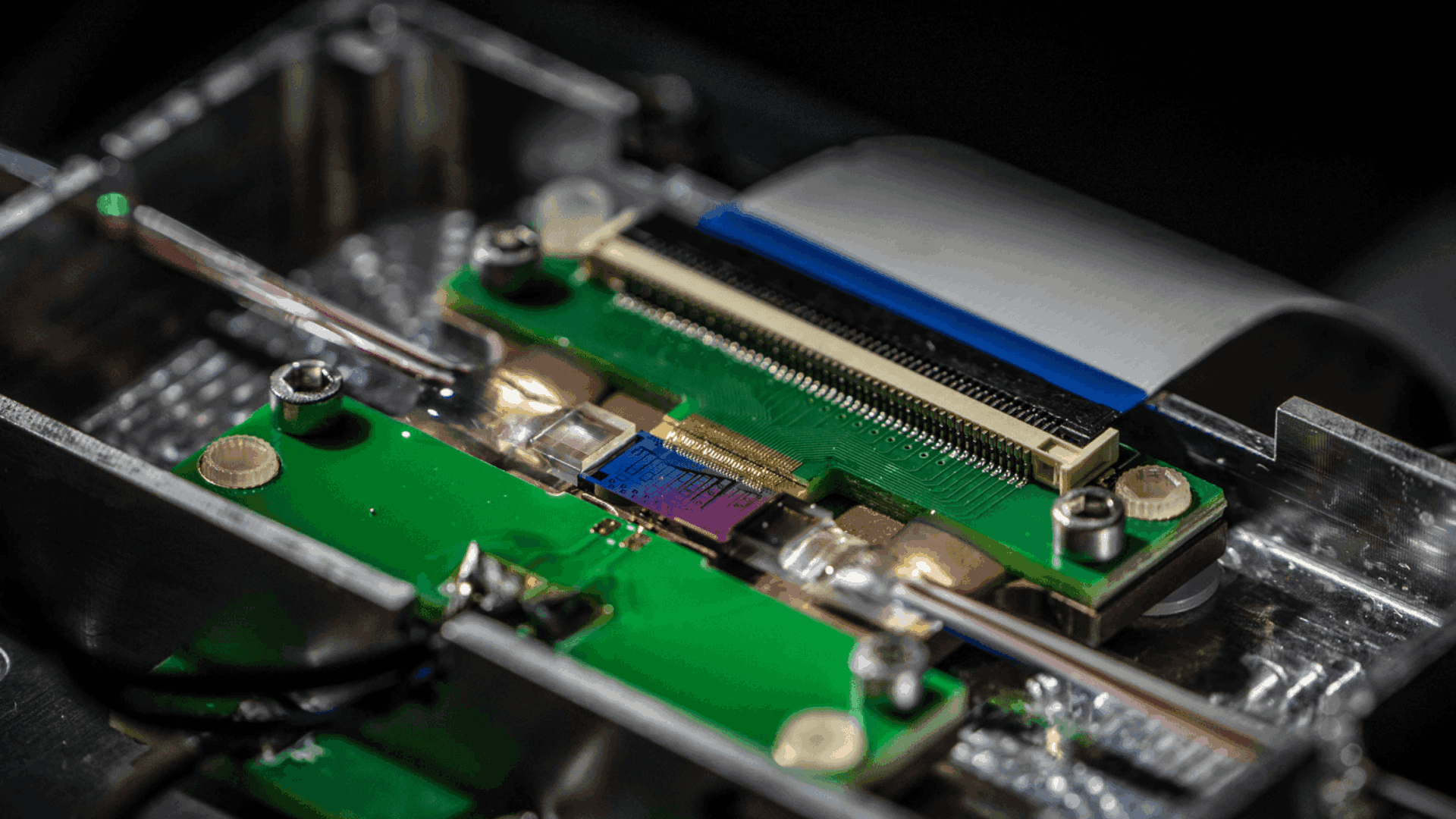
Photonic quantum computers use particles of light as qubits. Unlike the other approaches, photons have no mass, travel at the speed of light, and don’t interact with their environment the way matter does. Quantum information is encoded in properties of the photon like its polarization or the path it takes through an optical circuit.
Photonic systems operate at room temperature, which means no cryogenics required for the qubits themselves. Photons travel naturally through fiber optic cables, making this approach well suited for quantum networking. And because photons don’t interact with their environment, they don’t experience decoherence during transmission.
The fundamental challenge is that photons don’t easily interact with each other. In other systems, two-qubit gates happen when qubits physically influence one another. Photons pass through each other without effect. The workaround is using measurements to effectively create interactions, which means that gates sometimes fail and must be retried. Generating single photons reliably and detecting them efficiently also remains difficult.
For a deeper, more technical understanding of each approach, as well as which are best suited for each specific use case (e.g. simulation, optimization, etc) see our Quantum Approach Compendium in our Members-only Section.
Preview available to all visitors. Full access requires membership.